

Executive Case Study
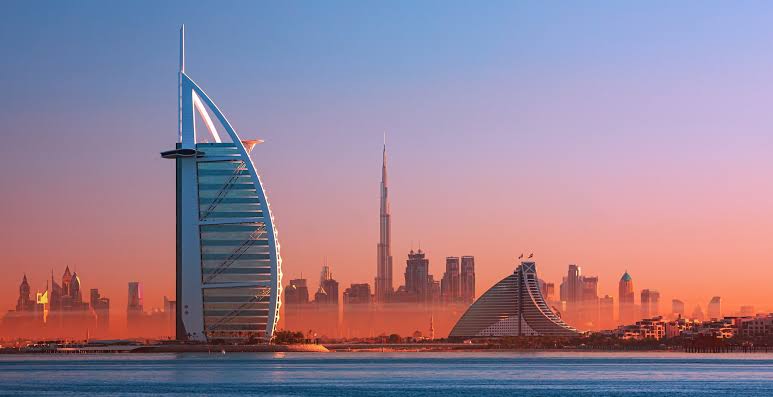
Why Is Dubai Able to Construct Faster Than Others?
How approvals, procurement, logistics, manufacturing and information flow combine to reduce waiting across the construction lifecycle.
- Port
- Manufacture
- Procure
- Site
- Handover
Dubai's construction speed is better understood as a system-speed advantage than as a single construction technique.
Conceptual graphic of the connected construction system discussed in this report; not a map or engineering diagram.01 / Executive Perspective
The critical question is not who works faster. It is where the project waits.
Dubai's construction story is useful because speed appears to be engineered across several layers of the system, not concentrated in one contractor, technology or material.
Dubai Municipality reported 23,270 buildings under construction during 2025, covering 40,028,453 square metres. In Q1 2026, the municipality reported 10,776 building permits, 10,855 structural inspections, 824,381 cubic metres of concrete supplied to active sites and 3,154 completion certificates. These figures describe scale and activity; they do not, by themselves, prove that Dubai is universally faster than other markets.
Approval friction
A unified digital permit environment linked with BIM, GIS, automated blueprint auditing and supporting agencies.
Material friction
A major port, free-zone and logistics ecosystem that supports high-volume movement of construction inputs.
Site productivity
Increasing use of off-site manufacturing, prefabrication and modular construction to shift work away from the site.
Coordination friction
Direct public-sector engagement with suppliers and contractors when capacity constraints threaten continuity.
Our central interpretation
The evidence points to a friction-reduction model: compress the time between design, approval, procurement, manufacturing, movement, installation and handover. This is an analytical interpretation, not a controlled comparison of Dubai against every other construction market.
02 / The Speed Equation
Dubai's advantage is cumulative: fewer handoffs, more parallel activity.
A construction programme becomes shorter when the system reduces waiting and allows dependent workstreams to overlap safely.
A useful way to model the difference is to separate the physical supply chain from the information supply chain. Physical materials can move quickly while the project still waits for an approval, purchase order, drawing revision or site decision.
Conceptual model: the faster the two flows stay synchronised, the less likely the project is to lose time at handoffs.
The sequential model
Design → Approval → Procurement → Manufacturing → Delivery → Installation
Every delay propagates forward. This is not always avoidable, since some activities genuinely depend on previous ones, but many project activities can be planned earlier or executed in parallel.
The parallel model
Design coordination + procurement planning + factory production + site preparation + logistics planning
These can overlap where dependencies permit.
The management question
Which activities are genuinely sequential, and which are sequential only because information, approvals or procurement are disconnected?
03 / Visual Evidence / From Approval to Site
The construction supply chain starts before the first pour.
Dubai's digital permitting architecture is designed to connect regulatory and technical information before work reaches the site.
Single window
One system connects building permit services across licensing authorities, replacing multiple disconnected systems.
BIM + GIS
Dubai Municipality describes integration with BIM, GIS and automated blueprint auditing.
Unified inspection
The municipality says the construction process was reduced to three pivotal steps: permit request, unified inspection, execution/service delivery.
What changes
| Before | Connected model |
|---|---|
| Multiple agencies / multiple systems | One digital entry point with linked licensing entities and service providers. |
| Manual drawing review | Automated blueprint auditing and BIM-supported submission workflows. |
| Repeated information transfer | Digital project information can move through the permit ecosystem without recreating the same submission at every node. |
Source limit
The digital permit system is evidence of process design. It does not mean every permit or project moves at the same speed, nor does it isolate the contribution of permitting from other causes of project performance.
04 / Pressure One: Logistics
A fast construction market needs a fast material network.
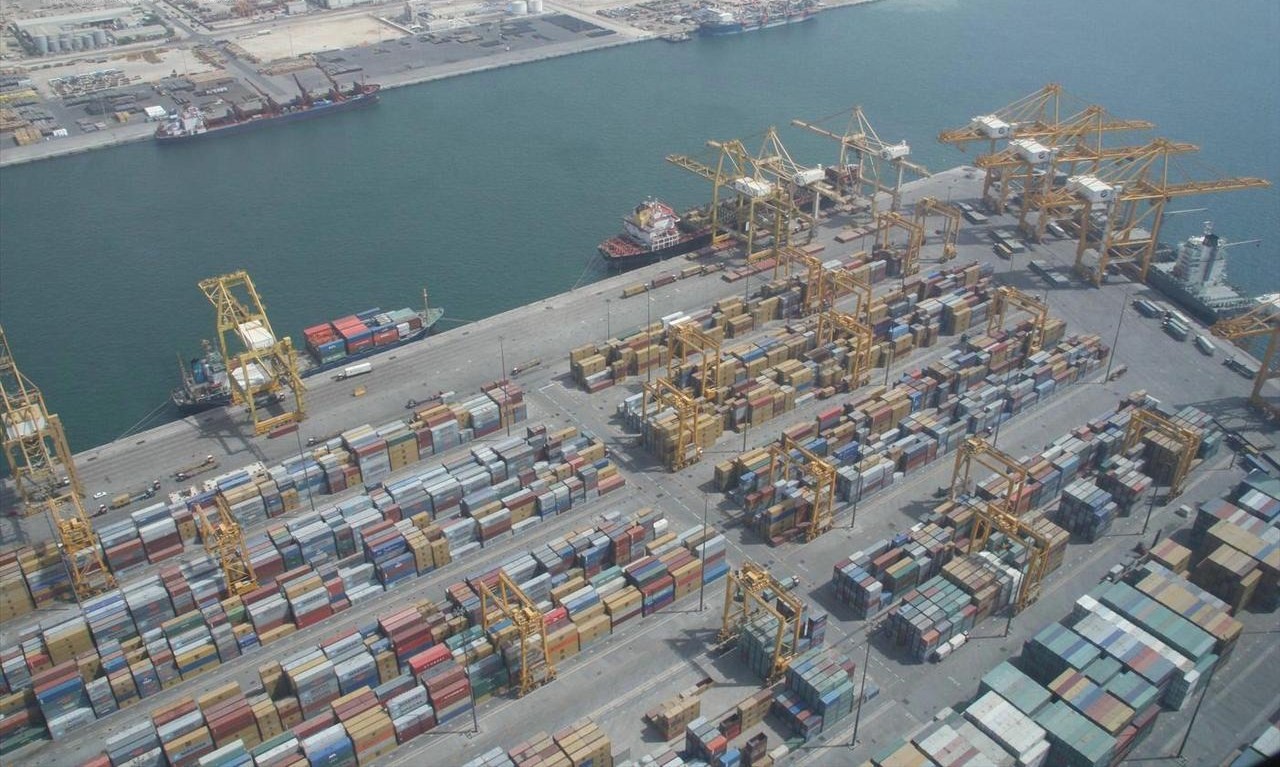
Dubai's port and logistics infrastructure reduces the distance between global supply, regional distribution and project demand.
DP World reported that Jebel Ali Port handled a record 630,000 tonnes of breakbulk cargo in October 2025, the highest monthly total in nearly two decades. It linked recent increases in iron and steel imports to major UAE projects including the Dubai Metro Blue Line and DWC airport expansion. Breakbulk volumes reached 5.36 million metric tonnes in 2024, up 23% year-on-year.
The lesson for construction is not simply that Dubai has a large port. The advantage is the network around the port: handling, storage, industrial activity, distribution and onward transport. When these nodes are close and predictable, material flow becomes easier to plan.
From global supply to site
- Global supplier
- Jebel Ali port
- Industrial / warehouse
- Project site
- Install
The supply-chain question: where can a handoff be removed, localised or made predictable?
The limit
Port capacity does not eliminate project-level shortages. Dubai Municipality's February 2026 meeting with ready-mix companies explicitly addressed concrete shortages and their impact on construction timelines. Speed therefore depends on coordination as well as infrastructure.
05 / Pressure Two: Off-Site Manufacturing
Move work off the site, and keep the site moving.
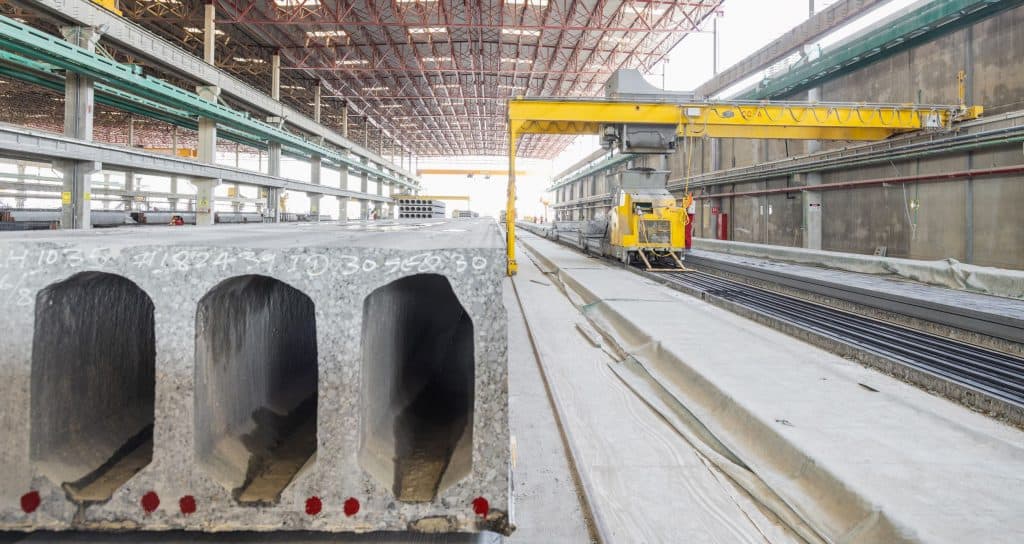
Prefabrication and modular construction turn parts of construction into controlled manufacturing activities.
Turner & Townsend's UAE 2024 market intelligence reported that 50% of survey respondents perceived a marginal increase in the adoption of off-site manufacturing and prefabricated components in the UAE construction industry during 2023. The research also noted that adoption varies by sector and project.
In June 2026, Dubai Municipality approved the Dubox Modular Construction System. The municipality described the method as manufacturing building units in a controlled factory environment and then transporting and assembling them on site within significantly shorter timeframes.
| Traditional site model | Modular / off-site model |
|---|---|
| More fabrication happens at the project location. | Defined building units are manufactured in a controlled facility. |
| Site conditions directly affect more of the production process. | Factory conditions can standardise part of production and quality control. |
| Material, labour and equipment converge at the site. | More work is completed before delivery, leaving site work focused on assembly and integration. |
The hidden requirement
Off-site construction does not remove coordination. It increases the value of coordination. Factory production needs stable drawings. Delivery needs site readiness. Installation needs the right sequence. Any mismatch can move the bottleneck rather than eliminate it.
The system effect
The more construction becomes distributed manufacturing + logistics + assembly, the more important it becomes to keep design, procurement, production, delivery and site status synchronised.
06 / Pressure Three: Coordination
When supply becomes a constraint, Dubai treats it as a system problem.
The February 2026 ready-mix meeting shows how the public sector can use direct industry coordination to address a supply bottleneck.
Dubai Municipality brought together leading ready-mix concrete companies in February 2026 to discuss concrete shortages, their effect on construction timelines, and proposals to improve supply efficiency and ensure sustainable availability. The municipality also described direct dialogue with sector partners as a way to address market realities and develop practical solutions.
Why this matters
Construction projects are dependent on markets outside the project boundary. If concrete, steel, transport capacity or a specialist component becomes constrained, individual contractors cannot always solve the underlying capacity problem alone.
Project continuity improves when capacity constraints are visible early and the actors who control supply can coordinate before shortages become site stoppages.
The management chain
| Signal | Coordination response | Project effect |
|---|---|---|
| Material shortage | Bring suppliers and authorities together; assess causes and supply capacity. | Reduce the chance that a market constraint becomes an unmanaged site delay. |
| Demand spike | Compare project requirements against available production and logistics capacity. | Sequence demand more deliberately. |
| Recurring bottleneck | Create a shared view of the constraint rather than solving the same issue project by project. | Improve resilience across multiple projects. |
07 / Pressure Four: The Information Supply Chain
The material may be ready. The project can still be waiting.
The physical supply chain only moves when the information supply chain clears the next decision.
A construction project has two intertwined flows. The first carries materials. The second carries decisions. A delay in the second can stop the first even when the material, supplier and labour are available.
| Physical event | Information event | Control question |
|---|---|---|
| Site needs material | BOQ → PR | Is the requirement visible and linked to the correct scope? |
| Supplier responds | RFQ → quote comparison | Can decision-makers see the alternatives and commercial impact? |
| Purchase is made | Approval → PO | Who owns the approval and when was it released? |
| Material moves | Dispatch → delivery tracking | Will the site be ready when the material arrives? |
| Material arrives | GRN → reconciliation | Does receipt update the project and commercial record? |
| Work progresses | Progress → cost → forecast | Does execution change what management expects? |
Construction speed is partly an information-flow problem.
A project can have the right material at the right supplier with the right workforce, and still lose days because a PR, approval, drawing revision, PO, GRN or commercial decision is not moving with the project.
The next frontier
Dubai has invested heavily in the physical and regulatory infrastructure that moves construction. The next productivity layer is connecting the information that tells each participant what to do, when to do it and what changed.
08 / What This Means for Construction Companies
The Dubai lesson is not "buy more technology". It is "connect the chain".
The strategic opportunity is to make the information layer as coordinated as the physical supply chain.
| Project need | Connected workflow | Management visibility |
|---|---|---|
| Material | BOQ → PR → RFQ → approval → PO | Where is the requirement stuck? |
| Delivery | PO → dispatch → delivery → GRN | Will the site receive it when needed? |
| Cost | BOQ → commitment → invoice → payment | What has been committed versus spent? |
| Execution | Drawing → approval → task → progress | What changed, who knows and what is affected? |
RDash sits in this information layer: connecting project execution, procurement, approvals, commercial control and finance around the same project context.
The operating principle
When information moves at the speed of the project, the project can move at the speed of its physical supply chain.
That does not mean software creates construction speed by itself. It means connected information can reduce avoidable waiting, make dependencies visible and allow teams to act on the same project reality.
09 / The Executive Agenda
Design the project so fewer things have to wait.
Dubai's construction ecosystem suggests a practical checklist for any contractor or project owner trying to compress delivery time. Bring these to your next executive review and require a concrete answer.
Map the waits
Where does work stop because the next approval, document, material or decision is missing?
Separate real dependencies
Which activities truly need to wait, and which are sequential only because teams are disconnected?
Connect procurement to programme
Can a material requirement be traced from BOQ through approval, PO, delivery and site receipt?
Move work off-site where viable
Which packages can be manufactured, tested or assembled before they reach the project?
Make changes travel
When a drawing or scope changes, can design, procurement, site and finance see the impact together?
Escalate supply constraints early
What material or capacity constraint could become a site delay in the next 2–4 weeks?
The last question
If the facts changed tomorrow, would your project change with them?
A high-speed construction system is not one that never encounters uncertainty. It is one that can see the uncertainty early, move the information quickly and change the plan before the cost of change becomes too high.
10 / Sources & Research Notes
Evidence, attribution and limits.
Public-source desk research reviewed 28 September 2026.
- [1]Dubai Municipality — 8 June 2022 — Dubai launches Single Window for Building Permits
- [2]Dubai Municipality — 2025 — Dubai construction permits up 20% in H1 2025
- [3]Dubai Municipality — 17 February 2026 — Dubai Municipality meets concrete firms on market supply
- [4]Dubai Government Media Office — 25 March 2026 — Dubai records strong construction performance in Q1 2026
- [5]Dubai Municipality — 29 June 2026 — Approval of Dubox Modular Construction System
- [6]DP World — 2025 — Jebel Ali Port sets breakbulk record
- [7]Turner & Townsend — UAE Market Intelligence 2024 — Future Ways of Working
- [8]Dubai Municipality — GIS Projects — Dubai BIM, automated design audit, electronic permits and GIS integration
How to read this report. The report does not claim that Dubai is universally faster than every other construction market. It identifies documented characteristics of Dubai's construction ecosystem that plausibly reduce waiting and support high-volume project delivery. Survey evidence on off-site manufacturing reflects perceptions, not a universal adoption rate.
Visual credits. Diagrams are original editorial graphics based on the cited public-source evidence; they simplify complex systems and are not technical drawings or audited performance models. Photographs are credited in their captions and used with permission of the rights holders. Headline construction figures are attributed to Dubai Municipality or the Dubai Government Media Office, Jebel Ali cargo figures to DP World, and off-site adoption to Turner & Townsend's UAE survey.
Dubai's construction speed is not one trick. It is the cumulative effect of reducing friction across the system.
Connect procurement, approvals, site execution and finance so your project can move at the speed of its supply chain.